BED BUGS
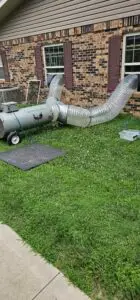
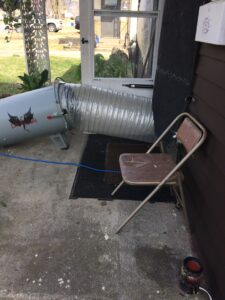
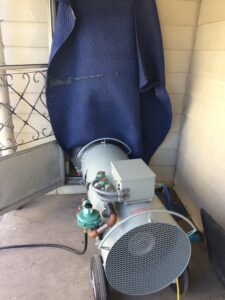
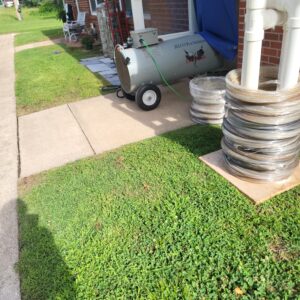
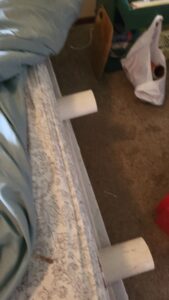
Bed Bugs during a Heat Treatment in Progress
Jelco Pest Solutions provides professional bed bug control in Joplin, MO and surrounding areas. We offer heat treatments and other targeted solutions designed to eliminate bed bug infestations in homes, apartments, hotels, and businesses. Bed bugs can spread quickly and become difficult to control once an infestation becomes established.
WHAT ARE BED BUGS?
Bed bugs (Cimex lectularius) are small insects that feed exclusively on blood and can reproduce quickly. They generally avoid light and remain hidden during daylight hours unless disturbed.
Bed bugs usually stay close to their host, which is why they are commonly found around beds, upholstered furniture, and other places where people sleep or rest. Humans are a favorite food, but a blood meal is a blood meal. They can hide in places you might not even think of.
My rule of thumb is simple: if you can slide a piece of paper into a crack or behind an object near a bed or couch, a bed bug can probably hide there.
Think you have Bed bugs?
Here are a few ways to check for yourself.
1. Look for spotting.
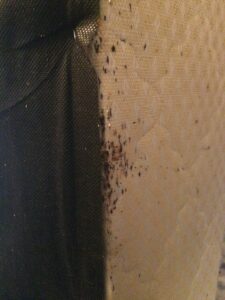
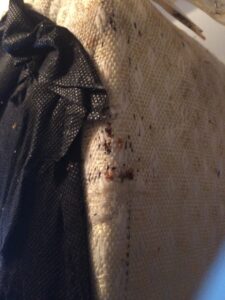
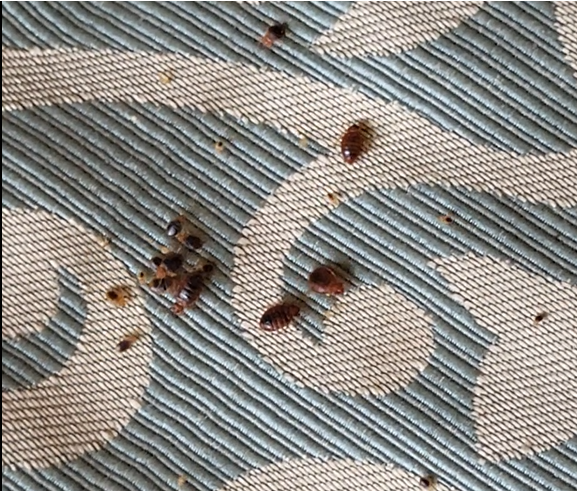
Check around your bed, including the corners of the mattress, sheets, pillows, headboard, and nearby furniture. Bed bug spotting is usually dark or rusty-colored and consists of digested blood left behind by the bugs. It can look like small spots of pepper or tiny stains on the fabric.
2. Look for shed skins.
What may appear to be dead bed bugs could actually be shed skins. Bed bugs shed their exoskeleton as they grow from one stage to the next. They go through five nymphal stages, called instars, before becoming adults.
3. Pay attention to unexplained bites.
A number of unexplained bites may be a sign of bed bugs, but bites alone are not enough to confirm an infestation. Fleas, mosquitoes, and other insects can cause similar reactions.
Of course, you may not see any of these signs. Not seeing evidence doesn’t necessarily mean bed bugs aren’t present.
The longer an infestation is allowed to develop, the more difficult it can become to control. If you’re unsure, a professional inspection can help determine whether bed bugs are actually present.
How to Get Rid of Bed Bugs?
There are several approaches to controlling and eliminating bed bugs. The right approach depends on the severity of the infestation, the structure being treated, and where the bed bugs are hiding.
Over-the-counter products can be tempting, but they are often not enough to eliminate an established infestation. Professional products are available to consumers, but having access to the product doesn’t provide the knowledge and experience needed to use it effectively. More importantly, pesticides should always be used according to the product label. The label is there for a reason—safety matters.
Over-the-counter products may kill bed bugs they contact, but they often don’t reach bugs hidden deep in cracks, furniture, walls, or other protected areas. Improper treatment can also cause bed bugs to move into new hiding places, making an established infestation more difficult to control.
Bed bugs have also developed resistance to some insecticides, which can make chemical control more challenging. This is one reason we don’t rely on a single product or treatment method for every infestation.
A Word About Bed Bug Dusts
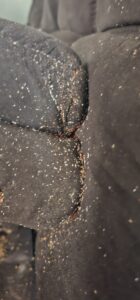
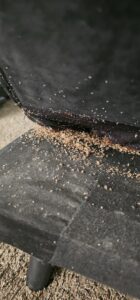
Diatomaceous earth and other bed bug dusts can be effective tools for killing bed bugs when used properly. However, we see many people apply far too much of these products, sometimes to the point that there is visible powder covering floors, furniture, and other surfaces throughout the room.
More is not necessarily better. Excessive amounts of dust can become airborne and create unnecessary exposure, particularly when the dust is disturbed or inhaled. Always use these products according to the label directions and use only products that are labeled for bed bug control.
My rule of thumb is simple: “If you can see it, it’s probably too much.”
A properly applied layer in the appropriate areas is preferable to covering an entire room in powder.
Bed Bug Eggs are Very Small—about the size of a pinhead—and can be difficult to see, especially when they are tucked into cracks, seams, or other protected areas. They can also blend surprisingly well into their surroundings, sometimes becoming difficult to distinguish from furniture stitching, fabric, or debris that has collected in the seams of a couch or chair. This is one reason a careful inspection is so important.
The eggs are usually whitish or pearly in color and may be found near areas where bed bugs are hiding. Finding a cluster of bed bugs, shed skins, or other signs of activity around a mattress, bedding, furniture, or nearby hiding places may indicate that eggs are present as well.
Because eggs can be difficult to locate and may be hidden in places that are easy to overlook, finding and eliminating them is an important part of controlling an established infestation.
BED BUG TREATMENTS
There are several ways to approach a bed bug infestation, and the best method depends on the structure, the severity of the infestation, and the circumstances involved.
Heat treatment is our preferred method and has been our most successful approach for eliminating bed bugs. When properly performed, heat can eliminate bed bugs throughout the treated area, including bugs hiding in places that may be difficult to reach with conventional treatments. However, heat treatment is not always practical or appropriate for every situation, and in those cases we explore other treatment options.
Chemical treatments can be effective, but established infestations may require multiple treatments and careful follow-up. In some situations, combining treatment methods can provide better control when the products and methods are used correctly.
We also use a biological pest-control product as part of our treatment options. These products work differently from conventional insecticides and may take additional time to achieve their full effect.
For our heat treatments, we use propane-powered heaters and high-capacity fans to circulate heated air throughout the structure. Heated air is directed into the home or business and continuously circulated to help bring the entire treatment area to the required temperature. Careful monitoring is an important part of the process to help ensure that the appropriate temperatures are reached throughout the treatment area.
Bed bug-proof mattress and box spring encasements can be an excellent investment. If bed bugs are already inside your mattress or box spring, a quality, bed bug-proof encasement can trap them inside so they cannot escape and reach you to feed. If your mattress and box spring are not infested, properly installed encasements can help prevent bed bugs from getting inside.
Either way, a quality encasement is another useful tool in the fight against bed bugs.
If you suspect you have bed bugs, call us or use our contact form to schedule an inspection. contact form
Looking for more information? Purdue University’s Department of Entomology offers excellent educational resources about bed bugs, including identification, prevention, and treatment information. Visit Purdue’s Bed Bug Resource Center.
If you are looking for a heat treatment, we have a prep sheet available to download. Just click the button and save the document.
Financing Available for Bed Bug Treatments
We understand that bed bug treatments can be an unexpected expense. To help make treatment more manageable, Jelco Pest Solutions offers financing and deferred payment options for qualified customers.
Ask us about available payment plans when scheduling your inspection or treatment.
Call (417) 782-1877 today to discuss your options and schedule service.
Trust Us, We've Seen Everything